Military to Cybersecurity Career Path: How Service Members Can Transition Into Cyber Careers
Leaving the military does not mean leaving behind your sense of mission.
For many service members, the transition into civilian life comes with a big question: What career path allows me to use the discipline, responsibility, and problem-solving skills I developed in uniform?
Cybersecurity is one of the strongest answers.
At its core, cybersecurity is about protecting people, systems, information, and organizations from digital threats. For service members who are used to operating in structured, high-responsibility environments, cybersecurity can offer a meaningful next mission.
F3USA helps transitioning service members prepare for civilian cybersecurity careers through DoW SkillBridge training, certification preparation, workforce development, and career support.
Why Cybersecurity Makes Sense After Military Service
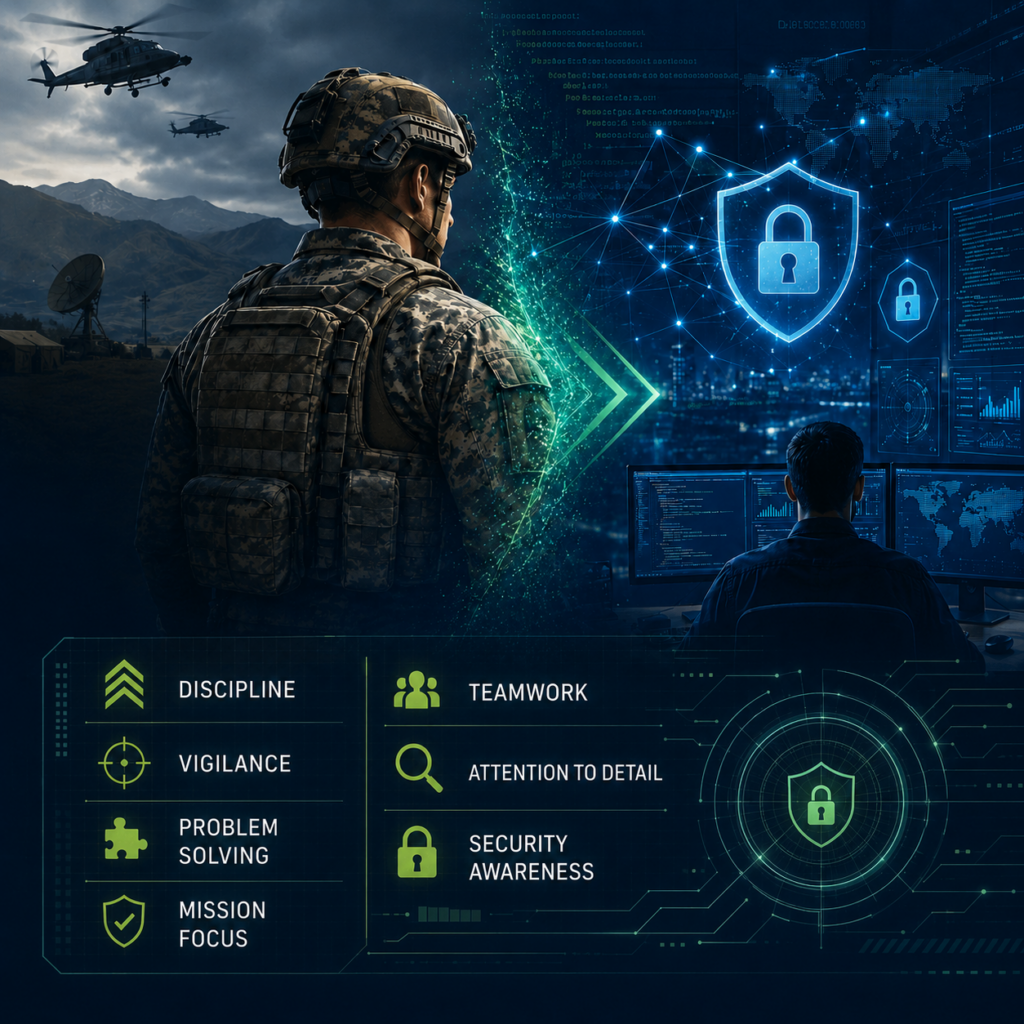
Many service members already have qualities that translate well into cybersecurity.
You may have experience with:
- Following strict procedures
- Protecting sensitive information
- Working under pressure
- Solving problems quickly
- Communicating with a team
- Staying alert to threats
- Operating within secure environments
- Taking responsibility for mission-critical tasks
Those skills matter in cybersecurity.
Cyber professionals often need to monitor systems, follow security procedures, document incidents, investigate problems, communicate clearly, and respond quickly when something goes wrong.
That does not mean every service member automatically becomes a cybersecurity expert. Technical skills still need to be learned. But military experience can provide a strong foundation.
The Cybersecurity Workforce Need
Cybersecurity is also a growing workforce need.
NIST reported that CyberSeek data showed 514,359 cybersecurity job listings over a recent 12-month period, an increase of nearly 57,000 listings compared with the prior reporting period. This reflects continued demand for cybersecurity professionals across public and private sector organizations.
For transitioning service members, that demand matters because it creates opportunities to build a career in a field connected to security, technology, and national resilience.
What Does a Cybersecurity Career Actually Look Like?
Cybersecurity is not just one job.
It includes many different career paths, depending on your interests, technical skills, experience, certifications, and long-term goals.
Some roles focus on monitoring systems. Others focus on networks, support, investigations, compliance, cloud systems, threat detection, or incident response.
For someone entering the field, possible starting points may include:
- SOC Analyst
- Cyber Technician
- Help Desk Technician
- IT Support Specialist
- Systems Administrator
- Junior Cybersecurity Analyst
- Technical Support Specialist
These roles can help you build experience while continuing to grow your cybersecurity skills.

Common Entry-Level Cybersecurity Pathways
SOC Analyst
A SOC Analyst works in a Security Operations Center and helps monitor systems for suspicious activity.
This role may involve reviewing alerts, analyzing logs, documenting incidents, escalating threats, and helping protect an organization’s digital environment.
For service members who are detail-oriented and comfortable with watchstanding, monitoring, reporting, or operations-based work, SOC analysis can feel familiar in structure.
Cyber Technician
A Cyber Technician may help support security tools, systems, networks, and technical operations.
This type of role can involve troubleshooting, basic security tasks, system support, and assisting more senior cybersecurity professionals.
It can be a strong early step for someone building technical confidence.
Systems Administrator
A Systems Administrator helps manage and maintain computer systems, servers, user accounts, permissions, updates, and technical infrastructure.
This role is not always labeled as cybersecurity, but it can be an important bridge into the field. Understanding systems is a major advantage for anyone who wants to protect them.
IT Support or Help Desk
Many cybersecurity careers begin in IT support.
Help desk and support roles can teach troubleshooting, customer communication, operating systems, networks, permissions, devices, and common technical problems.
This experience can build a foundation for future cybersecurity roles.
How Military Skills Translate Into Cybersecurity Skills
One of the most important parts of transition is learning how to translate your military experience into civilian language.
Here are some examples:
Military experience: Following standard operating procedures
Cybersecurity translation: Ability to follow security protocols and compliance processes
Military experience: Standing watch or monitoring activity
Cybersecurity translation: Alert monitoring and threat detection mindset
Military experience: Handling sensitive information
Cybersecurity translation: Understanding confidentiality, access control, and data protection
Military experience: Working under pressure
Cybersecurity translation: Incident response readiness
Military experience: Communicating up and down the chain of command
Cybersecurity translation: Clear documentation, escalation, and team communication
Military experience: Mission-first discipline
Cybersecurity translation: Reliability in high-stakes security environments
This translation matters because employers may not automatically understand military terminology. You have to help them see how your experience connects to the role they are hiring for.
Certifications That Can Support the Transition
Certifications can help service members show employers that they have developed foundational knowledge in cybersecurity and IT.
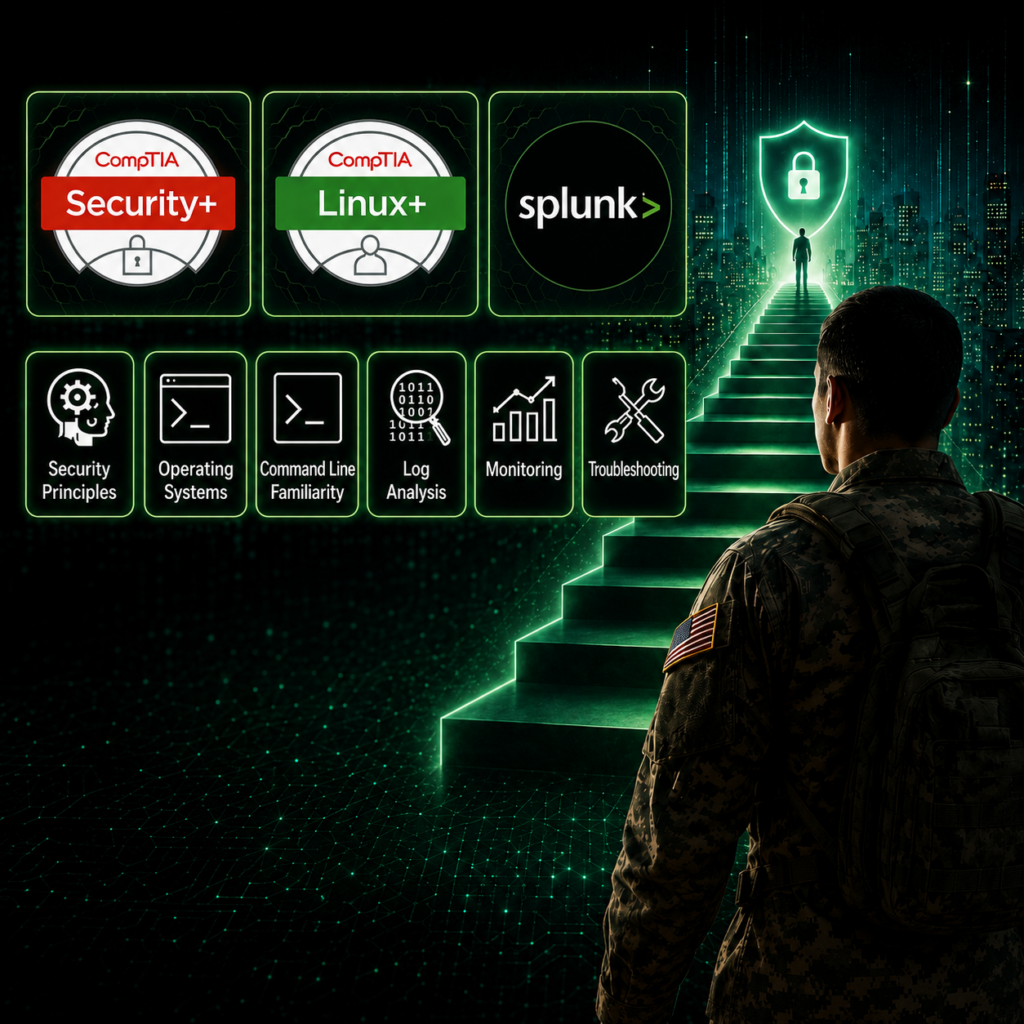
F3USA currently promotes training connected to:
- CompTIA Security+
- CompTIA Linux+
- Splunk
These certifications and tools can support important cybersecurity foundations, including security principles, operating systems, command-line familiarity, log analysis, monitoring, and technical troubleshooting.
However, certifications are not the whole journey.
A strong cybersecurity candidate also needs:
- Practical understanding
- Communication skills
- Professional readiness
- Interview preparation
- Resume clarity
- Career direction
- A willingness to keep learning
Cybersecurity changes constantly, so long-term growth depends on both technical skill and adaptability.
How DoW SkillBridge Can Help
DoW SkillBridge allows eligible service members to participate in approved civilian training, internships, apprenticeships, or industry programs during the final stage of military service.
Military OneSource explains that service members can receive up to 180 days of permissive duty, with unit commander approval, to focus on full-time training with approved industry partners.
For service members interested in cybersecurity, a SkillBridge program can create structure during the transition process.
Instead of trying to figure out the next step alone after separation, eligible service members may be able to begin training before leaving active duty.
What to Look for in a Military-to-Cybersecurity Program
Not all cybersecurity programs are the same.
When comparing programs, service members should look for more than a list of certifications.
Consider whether the program offers:
- Clear eligibility requirements
- Cybersecurity-focused training
- Certification preparation
- Career readiness support
- Resume and interview guidance
- Employer connections
- A realistic understanding of entry-level cyber roles
- Support for military-to-civilian transition
- A mission that aligns with service members
The right program should help you understand not just what to learn, but how to move toward employment.
How F3USA Supports the Transition
F3USA is a veteran-founded nonprofit helping active-duty service members transition into cybersecurity careers.
Through our DoW SkillBridge cybersecurity program, F3USA supports students with training, certification preparation, workforce development, and career support.
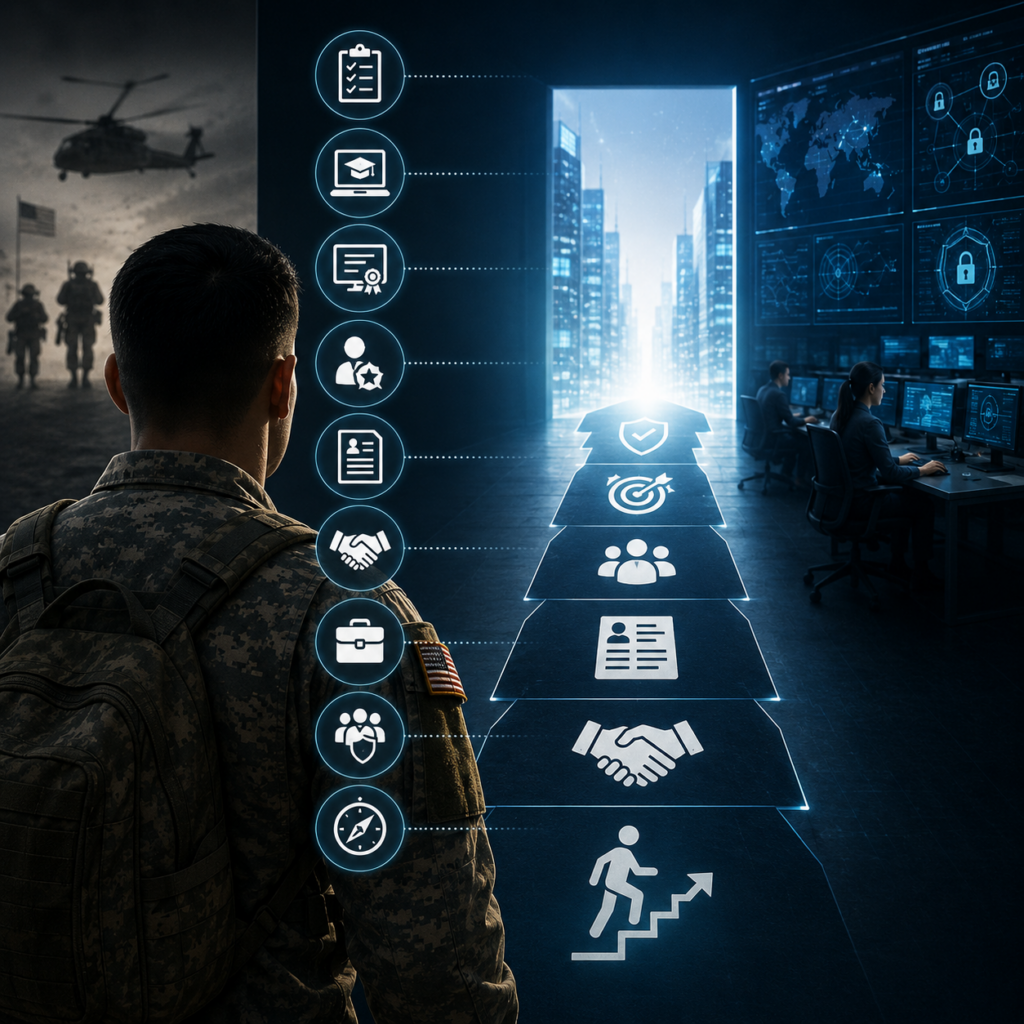
The mission is not simply to offer another course. The mission is to help service members move from military service into a new civilian pathway with structure, preparation, and support.
Final Thoughts
The move from military service to civilian life can feel overwhelming, but it can also be the beginning of a powerful new mission.
Cybersecurity offers service members a way to continue protecting people, systems, and organizations in a new environment.
With the right training, certifications, support, and career planning, military experience can become a strong foundation for a future in cyber.
How to Apply
If you are an active-duty service member within 180 days of transition and are interested in cybersecurity training through F3USA, visit the application page:
Frequently Asked Questions
Cybersecurity can be a strong career path for service members because it values discipline, problem-solving, attention to detail, security awareness, and mission-focused thinking.
Not always. A technical background can help, but service members from different roles may be able to build cybersecurity skills through training, certification preparation, and career support.
Possible early career roles may include SOC Analyst, Cyber Technician, Help Desk Technician, IT Support Specialist, Systems Administrator, Junior Cybersecurity Analyst, or Technical Support Specialist.
F3USA currently promotes training connected to CompTIA Security+, CompTIA Linux+, and Splunk.
Eligible service members may be able to use DoW SkillBridge during the final stage of military service with command approval. F3USA’s program is designed for active-duty service members within 180 days of transition.
Yes, the F3USA SkillBridge Cybersecurity Program is 100% virtual. Classes are held Monday through Friday via Zoom.
Subscribe to our Newsletter
Stay connected with us for updates on program milestones, upcoming events, and the latest success stories from our growing cyber force.
About F3USA
F3USA is a veteran-founded 501(c)(3) non-profit organization. Our Cybersecurity Program is free of charge for all transitioning service members.
EIN: 99-4886744
All contributions are tax-deductible to the extent allowed by law.