Can You Do SkillBridge Remotely? What Service Members Should Know
One of the most common questions service members have when exploring DoW SkillBridge is a practical one: can I do SkillBridge remotely?
The short answer is yes, in many cases. Approved SkillBridge providers can offer training remotely, and for cybersecurity specifically, virtual training has become an increasingly standard and accessible format.
This article explains what a remote SkillBridge program looks like, what to consider before choosing one, and how F3USA’s fully virtual DoW SkillBridge cybersecurity program supports transitioning service members wherever they are stationed.

What Is a Remote SkillBridge Program?
A remote SkillBridge program is a DoW SkillBridge-approved training opportunity that is delivered virtually rather than at a physical training location. Instead of reporting to a company office or classroom, participants complete their training online.
Remote SkillBridge programs can range from self-paced online courses to structured virtual classrooms with live instruction, scheduled sessions, and direct interaction with instructors and cohort members.
Not all SkillBridge providers offer remote options. Service members who are stationed at locations far from major metro areas, who are geographically constrained by family or assignment, or who simply prefer a flexible virtual format should specifically look for providers that are approved to offer remote training.
Is Remote SkillBridge Participation Authorized?
Yes. The DoW SkillBridge program does not restrict participation to in-person formats. What matters is that the training provider is approved as a DoW SkillBridge partner, that the service member has received command approval, and that the program aligns with the service member’s transition goals.
According to Military OneSource, the SkillBridge program allows service members to gain civilian work experience or training during the final 180 days of service, with commanding officer approval. The format, whether in-person or virtual, is a program-level detail rather than a program eligibility requirement.
Service members should confirm with their chain of command that remote participation is acceptable under their unit’s specific guidelines and should ensure the provider is an approved partner before beginning.
Benefits of Participating in a Remote SkillBridge Cybersecurity Program
Remote participation offers several meaningful advantages for transitioning service members:
Location flexibility: You can participate from wherever you are stationed, without needing to relocate, commute to a training facility, or request a different duty assignment. This is especially valuable for service members at remote installations or overseas.
Scheduling consistency: Structured virtual programs with live instruction provide a schedule that mirrors a professional work environment, helping you adapt to civilian work rhythms before you fully transition.
Access to quality programs: Remote availability means you are not limited to programs that are physically nearby. You can select a program based on content, quality, and fit, not just geography.
Focus on learning: Without a daily commute or physical relocation, you can direct more energy toward the training content itself, which can support stronger preparation for certification exams and career readiness.
Family and life continuity: Remote participation allows service members to remain with their families during the transition period, which can reduce stress and support overall well-being during this major life change.
Challenges of Remote SkillBridge Participation and How to Manage Them
Remote participation does come with some considerations worth thinking through:
Self-discipline: Virtual learning requires you to show up, stay engaged, and manage your time effectively without someone physically present to hold you accountable. This is a skill that military service has likely prepared you for, but it is still worth being intentional about.
Technology requirements: You will need a reliable computer and internet connection. If you are on a military installation with network restrictions, confirm ahead of time that you can access the necessary platforms and tools.
Limited in-person networking: Remote programs may offer fewer face-to-face opportunities with instructors or industry professionals. Look for programs that build in virtual networking, live sessions, or cohort-based engagement to offset this.
Distractions: Training from home or a barracks room can come with more distractions than a dedicated training facility. Create a dedicated workspace and treat your SkillBridge schedule as a professional commitment.

What F3USA's Remote SkillBridge Cybersecurity Program Looks Like
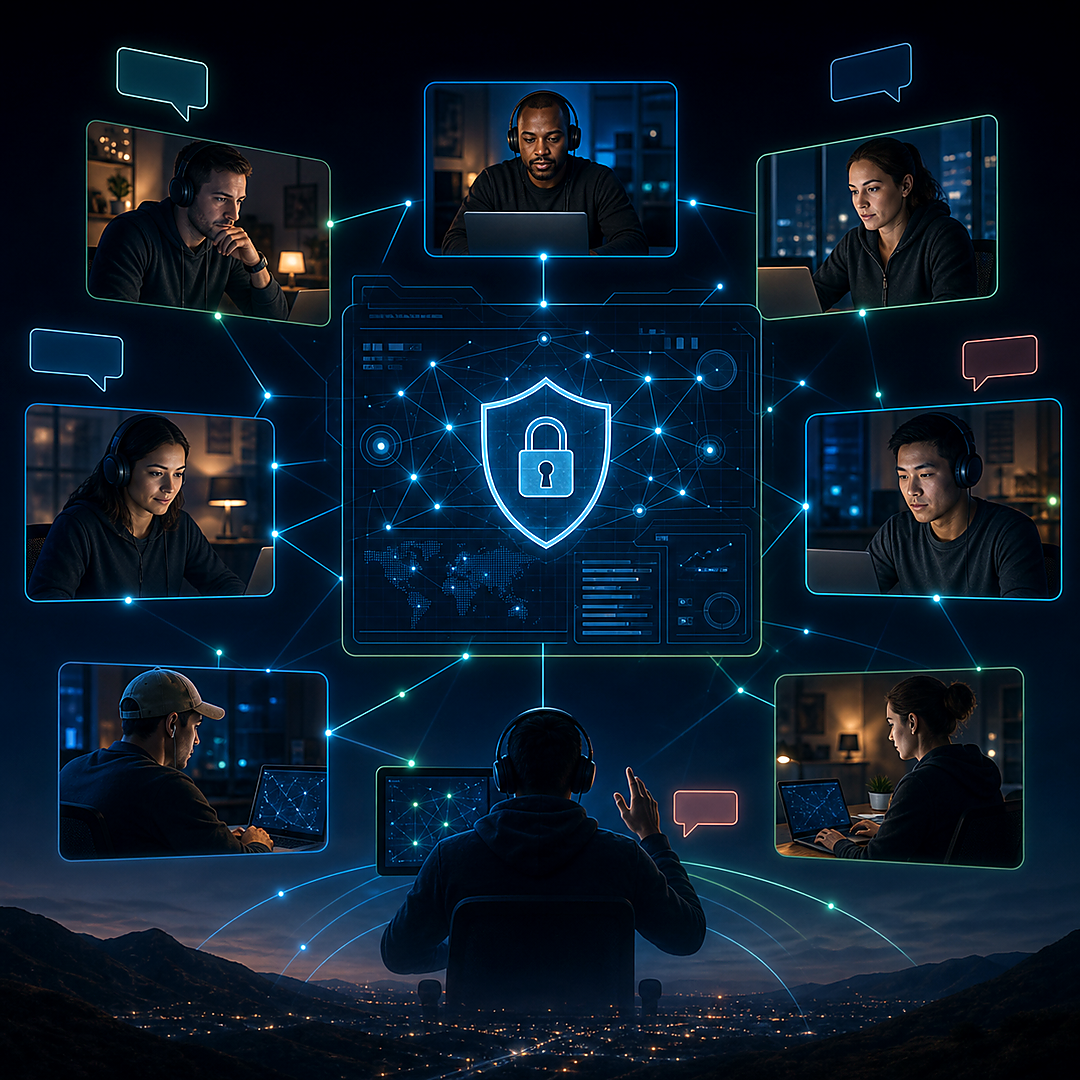
F3USA’s DoW SkillBridge cybersecurity program is designed to be fully virtual, making it accessible to eligible service members across the country and wherever they are stationed.
The program is delivered via Zoom, with live classes held Monday through Friday. This structured virtual format mirrors a professional work environment, supporting workforce preparation alongside technical training.
The current program is 10 weeks and focuses on training and certification preparation connected to CompTIA Security+, CompTIA Linux+, and Splunk, along with cybersecurity fundamentals, technical foundations, and career readiness support.
Because the program is fully remote, participants do not need to relocate or commute. They engage with live instruction, fellow cohort members, and program content from wherever they are, as long as they have a reliable internet connection and an approved SkillBridge arrangement.
How F3USA Supports Transitioning Service Members Virtually
F3USA is a veteran-founded nonprofit. We understand that transitioning service members are navigating more than just a career change. They are adjusting to a new schedule, a new identity, and a new set of expectations, often while managing family obligations, housing decisions, and separation processing.
Our virtual program is designed to support service members through that transition, not just deliver training content. We focus on workforce preparation and career readiness alongside technical skills, so that students leave prepared for the civilian cybersecurity workforce, not just for a certification exam.
Learn more about our program at f3usa.org/skillbridge or reach out through our contact page.
How to Apply
If you are an active-duty service member within 180 days of transition and are interested in F3USA’s remote DoW SkillBridge cybersecurity program:
Frequently Asked Questions
Yes. The DoW SkillBridge program does not restrict participation to in-person formats. Remote SkillBridge participation is allowed as long as the provider is DoW-approved and the service member has command approval.
Yes. Command approval is required for all SkillBridge participation, regardless of whether the program is remote or in-person. Service members should begin the approval process early and confirm that remote participation aligns with their unit’s guidelines.
Participants need a reliable computer and internet connection. Classes are conducted via Zoom. If you are on a military installation with network filtering, confirm that Zoom and other training tools are accessible before beginning.
This depends on your installation’s network access, time zone, and unit guidelines. Service members at overseas installations should confirm logistics with their chain of command and the training provider before pursuing a remote SkillBridge option.
F3USA’s DoW SkillBridge cybersecurity program is 10 weeks, fully virtual, with live classes held Monday through Friday via Zoom. The program covers cybersecurity fundamentals, technical foundations, and certification preparation connected to CompTIA Security+, CompTIA Linux+, and Splunk.
Subscribe to our Newsletter
Stay connected with us for updates on program milestones, upcoming events, and the latest success stories from our growing cyber force.
About F3USA
F3USA is a veteran-founded 501(c)(3) non-profit organization. Our Cybersecurity Program is free of charge for all transitioning service members.
EIN: 99-4886744
All contributions are tax-deductible to the extent allowed by law.
