How Your Military Security Clearance Can Strengthen Your Civilian Cybersecurity Career
Most transitioning service members know they are leaving the military with real skills. But what many do not fully appreciate is that they may also be leaving with an active or previously held military security clearance. That credential is one of the most financially valuable ones in the cybersecurity job market.
Civilian cybersecurity employers, particularly those supporting federal agencies, defense contractors, and intelligence community programs, place significant weight on clearances. Obtaining one from scratch takes time, money, and bureaucratic patience that most employers would prefer to avoid. So candidates who arrive with an existing clearance skip that line entirely.
This article explains how your military security clearance strengthens your civilian cybersecurity career. It also covers which roles benefit most and how to position your clearance effectively alongside your certifications and training.
What Is a Security Clearance and Why Do Civilian Employers Care?
A security clearance is a government-issued authorization allowing an individual to access classified information up to a specified level. Various federal agencies grant clearances, and you will find them across government, military, and private sector environments that handle sensitive or classified information.
Civilian employers care about clearances for one primary reason: cost and time. According to the Defense Counterintelligence and Security Agency (DCSA), obtaining a new Top Secret clearance can take anywhere from six months to over two years, depending on scope and workload. That timeline applies to a candidate who does not already hold one. The investigation process alone can cost an employer thousands of dollars in labor and administrative resources.
So a candidate who already holds an active clearance, or who held one recently enough that reinvestigation may happen quickly, removes that entire barrier. For companies competing to staff cleared roles in a tight labor market, that is a meaningful competitive advantage in the candidate.
Understanding Military Security Clearance Levels and What Each Means in the Civilian Market
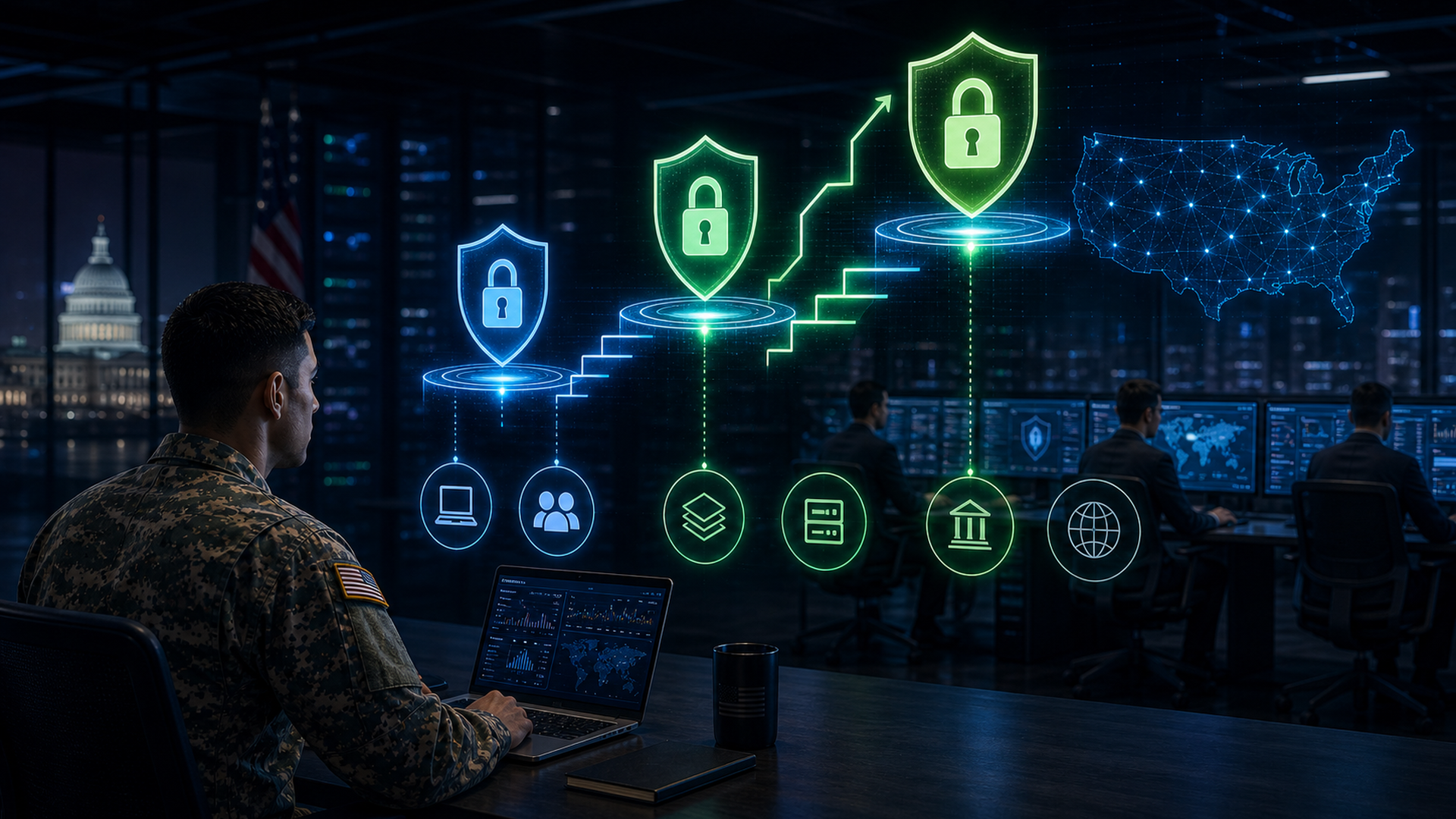
Not all clearances carry equal weight in the civilian job market. Understanding where your military security clearance sits on the spectrum helps you communicate its value to employers accurately.
Confidential: The lowest level of clearance. Provides access to information that could cause damage to national security if disclosed. Less common as a specific hiring requirement in civilian cybersecurity, but still noted by employers.
Secret: Provides access to information that could cause serious damage to national security. Required for a broad range of defense contractor and government support roles. Widely recognized and valued in the civilian cybersecurity market.
Top Secret (TS): Provides access to information that could cause exceptionally grave damage to national security. Significantly more valuable in the civilian market, particularly for roles supporting federal agencies, the intelligence community, or classified defense programs.
Top Secret / Sensitive Compartmented Information (TS/SCI): The highest civilian-accessible clearance level. Required for roles involving intelligence community support, certain Department of War programs, and classified cybersecurity operations. Candidates with active TS/SCI clearances are in high demand and relatively short supply. That combination creates strong compensation leverage.
If you hold or have held a Secret or Top Secret clearance, lead with that fact in your job search. Many defense contractor and government support positions list it as a required or strongly preferred qualification. Candidates without it simply cannot apply.
Which Civilian Cybersecurity Roles Benefit Most From a Security Clearance?
Security clearances are most relevant in sectors where organizations handle classified or sensitive government information. The cybersecurity roles that most commonly require or benefit from a clearance include:
Government IT / Cybersecurity Analyst: Federal agencies across civilian and defense branches employ cybersecurity professionals to protect government systems. Many of these roles require Secret or Top Secret clearances as a condition of employment.
Defense Contractor Cybersecurity Roles: Large defense contractors employ thousands of cybersecurity professionals supporting military programs. These roles almost universally require active clearances and often sponsor additional clearance upgrades over time.
Intelligence Community Support: Organizations supporting NSA, CIA, DIA, and other intelligence agencies require TS/SCI clearances for most technical roles. Candidates from military intelligence backgrounds are particularly well-positioned here.
Cleared SOC Analyst: Many security operations centers supporting government programs require cleared analysts. These positions often carry salary premiums over comparable uncleared SOC roles in the private sector.
Penetration Tester / Red Team (Cleared): Government-focused red team and penetration testing roles frequently require clearances, particularly for work on classified systems or networks.
Even in private sector cybersecurity roles that do not formally require a clearance, having one can still be an asset. It demonstrates that you have been through a thorough background investigation, have a history of trustworthiness and reliability, and can handle sensitive information responsibly. All of these are qualities private sector employers value.
How to Maintain and Protect Your Security Clearance During Transition
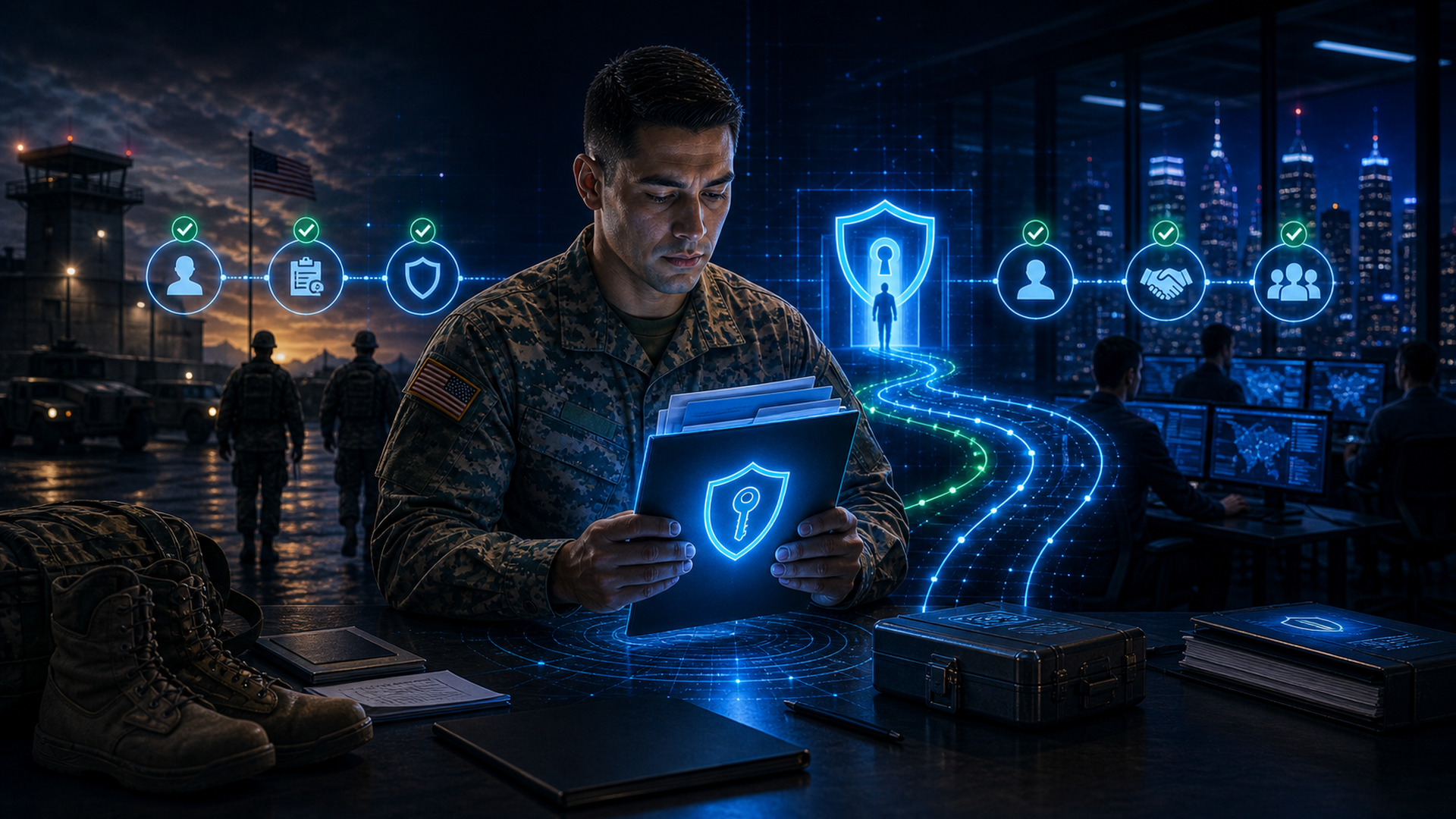
One of the most common mistakes transitioning service members make with their clearances is letting them lapse. Clearances enter an inactive status when a service member separates and does not move immediately into a cleared civilian role. The amount of time before a lapsed clearance requires a full reinvestigation varies by level and agency. But the longer you wait, the more the process resembles starting fresh.
Here is what to keep in mind:
Document your clearance status before you out-process: Confirm your clearance level, the date it was granted, and any relevant adjudicative details. Keep records accessible, because prospective employers will ask.
Move toward cleared employment quickly if possible: The faster you transition into a cleared civilian role, the less risk there is of your clearance lapsing. This is one reason pursuing cleared job opportunities during your SkillBridge period or immediately after separation is strategic.
Be transparent about your clearance history: When applying for civilian roles, disclose your clearance status accurately. Misrepresenting clearance status, in either direction, creates problems in the security investigation process.
Understand that your clearance travels with you: Your clearance follows you as an individual, not your unit or employer. When you move to a cleared civilian employer, they sponsor the continuation or reinvestigation of your clearance.
How to Use Your Security Clearance Alongside Certifications and Training
A military security clearance by itself is not a cybersecurity qualification. Employers in cleared roles still expect technical competence. They also need someone who can be trusted with sensitive information. The strongest position to be in is clearance plus certification plus training.
A service member who holds a Secret or Top Secret clearance and is also pursuing or has earned CompTIA Security+ is significantly more competitive for cleared entry-level cybersecurity roles than candidates who offer one without the other. The clearance confirms trustworthiness, while the certification confirms technical readiness. That combination is what most cleared employers are looking for in entry-level hires.
This is part of why the DoW SkillBridge cybersecurity training period is so strategically valuable for cleared service members. Using SkillBridge to build technical certifications and cybersecurity training while your clearance is still active means you enter the civilian job market with both credentials working in your favor simultaneously.

How F3USA Helps Service Members Prepare for Cleared Cybersecurity Careers
F3USA is a veteran-founded nonprofit helping transitioning service members prepare for civilian cybersecurity careers through DoW SkillBridge training, certification preparation, workforce preparation, and career support.
Our program is designed for service members who are transitioning into the civilian cybersecurity workforce. That includes those who hold a military security clearance and are targeting government and defense contractor roles. The technical training and certification preparation we provide in Security+, Linux+, and Splunk directly strengthens your profile for cleared cybersecurity positions.
The program is 100 percent virtual, with live classes held Monday through Friday via Zoom. It is currently 10 weeks and is offered at no cost to eligible active-duty service members within 180 days of transition. Visit f3usa.org/skillbridge to learn more, or reach out directly through our contact page.
How to Apply
If you are an active-duty service member within 180 days of transition and want to build toward a civilian cybersecurity career:
Frequently Asked Questions
Not automatically, but it can transfer with employer sponsorship. When you move to a cleared civilian employer, that employer sponsors the continuation or reinvestigation of your clearance. The key is to move into a cleared role before your clearance lapses into inactive status, which happens after separation if you are not working in a cleared environment.
Clearance validity after separation depends on the level and the policies of the granting agency. Generally, Secret clearances may be valid for up to six years and Top Secret clearances for up to five years. However, an unused clearance begins the lapse process at separation, and a reinvestigation may be necessary if too much time passes. Contact DCSA or your transition office for current guidance specific to your situation.
Yes. List your clearance level, the granting agency (if you can disclose it), and the date it was granted or last investigated. Be accurate, because overstating or misrepresenting your clearance creates serious problems. Many resume reviewers for cleared positions are themselves cleared and will verify what you state.
Yes, generally. Cleared cybersecurity roles, particularly those requiring Top Secret or TS/SCI, carry salary premiums over comparable uncleared positions. The premium reflects the limited supply of qualified, cleared candidates and the cost and time employers save by not having to sponsor a clearance from scratch.
If Your Security Clearance Has Lapsed
A lapsed clearance is not the end of the road. Depending on how long it has been and what level you held, a reinvestigation may be faster than a new investigation. Disclose your prior clearance status honestly to prospective employers, and let them assess your sponsorship eligibility. Some employers are willing to sponsor reinvestigations for strong candidates.
SkillBridge training typically takes place at civilian organizations or in civilian training environments. Whether a specific SkillBridge program involves classified systems depends entirely on the provider and the specific program. F3USA’s DoW SkillBridge cybersecurity program is a civilian training environment. It does not involve work on classified systems, but it prepares you for civilian and cleared civilian cybersecurity roles.
No. Some service members are told they have “clearance eligibility,” meaning they have been determined eligible but have not yet been formally granted a clearance or accessed classified information. This is different from holding an active clearance. Many employers distinguish between the two, so understand which applies to you and communicate it accurately.
Subscribe to our Newsletter
Stay connected with us for updates on program milestones, upcoming events, and the latest success stories from our growing cyber force.
About F3USA
F3USA is a veteran-founded 501(c)(3) non-profit organization. Our Cybersecurity Program is free of charge for all transitioning service members.
EIN: 99-4886744
All contributions are tax-deductible to the extent allowed by law.
